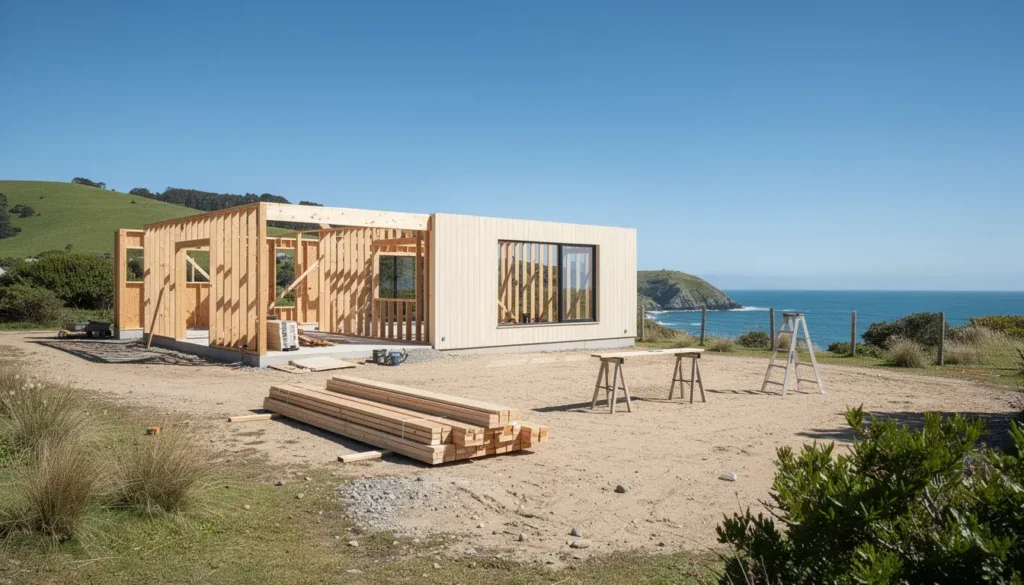
Welcome to our comprehensive guide on the cost to build a house in Bay of Plenty. Whether you’re a first-time builder, a growing family, or someone dreaming of a coastal retreat, understanding the financial landscape of building a new home in this vibrant region is essential. Here, you’ll find up-to-date information, practical examples, and expert advice to help you plan a realistic budget and navigate the building process with confidence. Let’s explore what it takes to turn your dream home into reality in Bay of Plenty.
Table of Contents
Key Takeaways
- In 2026, most new homes in Bay of Plenty cost roughly $2,800–$3,900 per square metre to build, excluding land, landscaping, and major site works.
- A modest 150m² home in Tauranga typically ranges from about $420,000–$585,000 to build; a 200m² family home can sit between $560,000–$780,000 before adding land.
- Coastal and sloping sites (Papamoa Hills, Ōhope, rural Pyes Pa) can add tens of thousands in earthworks, retaining walls, and foundations compared with flat, serviced subdivisions.
- Bay of Plenty sits in the mid–high range nationally for build cost per square metre, but below Auckland and Queenstown, with Tauranga and Papamoa at the upper end of regional costs.
- Always add a 10–15% contingency to any build budget and get a Bay of Plenty–specific fixed price or capped quote from local builders or a quantity surveyor.
Introduction: Building in Bay of Plenty vs Rest of NZ
Bay of Plenty has become one of New Zealand’s most sought-after regions for new house construction. Areas like Tauranga, Papamoa, Mount Maunganui, Whakatāne, Rotorua, Te Puke, and Katikati have experienced strong population growth since around 2015, driving consistent demand for new homes. The lifestyle appeal of coastal living, combined with improving infrastructure and a growing economy, continues to attract families, retirees, and investors alike.
When comparing the cost to build a house in Bay of Plenty against the rest of the country, the region sits in the mid-to-upper bracket. The national average consented build price in recent years has hovered in the low-to-mid $400,000s, with average construction costs now commonly between $2,800–$4,000 per square metre depending on location and specification. Bay of Plenty tracks slightly above the national average, influenced by its popularity and coastal building requirements, but remains more affordable than Auckland or the Queenstown-Lakes district.
This article focuses specifically on what it costs to build a new house in Bay of Plenty in 2026, using ballpark figures and practical examples rather than generic national averages. All figures are indicative only and will vary with design, builder, and exact location. Treat this as a planning guide rather than a quote, and always seek professional advice from local builders or a quantity surveyor for your specific project.
Average Build Cost in Bay of Plenty (Per m² and By House Size)
This section gives you the fast answers: current cost ranges per square metre for Bay of Plenty, plus worked examples for common house sizes. These figures represent build-only costs, GST-inclusive, and exclude section purchase price.
Cost Per Square Metre Ranges (2026)
| Build Type | Cost Per Square Metre |
|---|---|
| Basic group-build or standard plan home | $2,800–$3,200 |
| Mid-range family home with some upgrades | $3,200–$3,600 |
| High-end / architectural or complex site | $3,600–$3,900+ |
These ranges align with recent industry data showing Bay of Plenty building costs at approximately $3,431 per square metre in 2026, though actual quotes can vary significantly based on your specific circumstances.
Concrete Example Calculations
120m² compact home in an established Tauranga subdivision: At $2,800–$3,600 per m², expect a rough build range of $336,000–$432,000 depending on specification level. This suits first-home buyers or those downsizing who want a simple, efficient layout.
150m² three-bedroom family home in Papamoa: Using the mid-range estimate of $2,800–$3,600 per m², you’re looking at roughly $420,000–$540,000. Note that coastal wind zones and stricter cladding specifications often push estimates toward the upper band in this area.
200m² four-bedroom home on moderately sloping land near Ōmokoroa: At $3,000–$3,900 per m², budget approximately $600,000–$780,000. Sloping sites require additional earthworks and retaining walls, which can add $30,000–$80,000 to your total budget.
For context, Bay of Plenty generally sits slightly above Christchurch and Hamilton costs but below Auckland’s average of around $3,252 per square metre. This makes the region competitive for those seeking coastal lifestyle without the Auckland price tag.
Regional Variations Within Bay of Plenty
Even within Bay of Plenty, building costs vary considerably by town and micro-location. Labour demand, land conditions, and council fees all influence your final cost.
Tauranga, Mount Maunganui, and Papamoa
These areas represent the most expensive building locations in the region. Higher demand means more competition for trades, and coastal conditions require upgraded materials and construction methods. Most builds here trend closer to $3,300–$3,900 per square metre for mid-range and above. The proximity to Auckland also means labour costs can reflect the broader market pressures.
Rotorua
Rotorua typically offers more affordable labour rates and land prices compared to the coastal strip. Standard builds may sit in the lower half of the Bay of Plenty range, around $2,800–$3,300 per square metre. However, some pockets require geothermal and soil considerations that can add unexpected costs if not investigated early.
Whakatāne and Ōhope
These eastern Bay of Plenty locations offer relatively moderate build costs overall, but coastal and hillside sites can increase earthworks requirements significantly. Corrosion-resistant materials are essential for properties exposed to salt air, adding 10–15% to material costs in some cases.
Smaller Centres (Te Puke, Katikati, Edgecumbe, Kawerau)
These areas can offer slightly lower build rates due to reduced land prices and less intense market pressure. However, fewer local suppliers sometimes mean extra transport costs for building materials, and there may be less competition among builders. The trade-off between lower base costs and logistics considerations often balances out.
Council Fee Variations
Development contributions and consent fees vary between Tauranga City, Western Bay of Plenty District, Rotorua Lakes Council, and Whakatāne District. Check each council’s online fee schedules when budgeting consent costs can range from a few thousand dollars for straightforward builds to $15,000+ for complex projects.
The same 150m² design can easily differ by $30,000–$60,000 across different Bay of Plenty sites once earthworks and service connections are included. Always use location-specific quotes from local builders rather than assuming a single regional rate.
What’s Included (and Excluded) in Bay of Plenty Build Prices
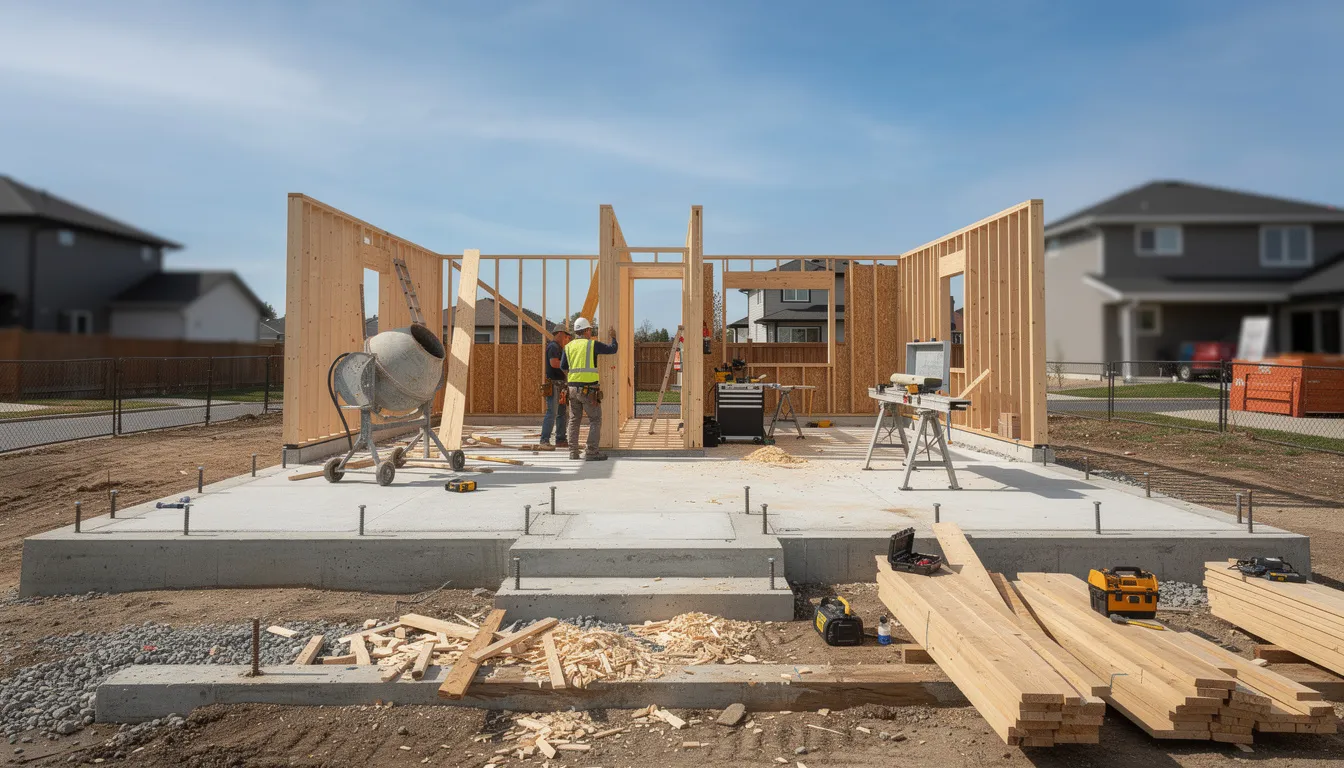
Understanding what “cost to build” actually means is essential for avoiding budget blowouts. Bay of Plenty builders differ on what they include in their per square metre rate, and the gap between “shell-only” and “turnkey” can be substantial.
Typical Inclusions for a Standard Turnkey Build
Most reputable Bay of Plenty building companies include:
- Foundations, framing, roofing, windows, insulation, and internal linings meeting NZ Building Code and local wind/seismic requirements
- Basic kitchen and bathroom fit-out (laminate benchtops, standard tapware, and appliances allowance)
- Internal painting, standard carpet and vinyl, internal doors, and wardrobes
- Basic electrical fit-out, heat pump allowance suitable to local climate, and standard plumbing connections inside the boundary
Common Exclusions (The Hidden Costs)
These items frequently surprise Bay of Plenty clients and represent some of the most significant hidden costs in any build:
| Exclusion Category | Typical Cost Range |
|---|---|
| Section purchase price and legal fees | Varies widely by location |
| Subdivision contributions (Pyes Pa, Papamoa, Ōmokoroa) | $15,000–$40,000+ |
| Major earthworks and retaining walls | $20,000–$100,000+ |
| Driveways and concrete driveways | $8,000–$25,000 |
| Fencing | $5,000–$20,000 |
| Decks and outdoor living areas | $15,000–$50,000+ |
| Landscaping | $10,000–$40,000+ |
| Geotechnical reports and engineered foundations | $3,000–$15,000+ |
| Special coastal corrosion treatments | Varies by exposure |
| Utility connections (power, fibre, water, wastewater) | $5,000–$25,000 |
| Rural septic systems and water tanks | $20,000–$50,000 |
| Curtains, blinds, and finishing costs | $5,000–$15,000 |
When comparing builder quotes, always gather detailed inclusion/exclusion lists. A seemingly cheap per square metre rate becomes expensive quickly when you add site works, service connections, and all the finishing costs needed for a liveable home.
Key Factors That Influence Build Cost in Bay of Plenty
Several major factors push Bay of Plenty building costs up or down. Understanding these helps you make informed decisions about design, site selection, and budget allocation.
Home Size and Layout
Smaller homes (under approximately 140m²) often show a higher cost per square metre. This occurs because fixed costs like kitchen fit-outs, bathrooms, building consent applications, and site establishment get spread over fewer square metres. A 100m² home might cost $3,500 per m² while a 200m² home of similar specification comes in at $3,200 per m².
Simple rectangular floor plans with single-level layouts are considerably cheaper than multi-wing or multi-level designs. These complex layouts are common in coastal and hillside builds but significantly increase both materials and labour costs.
Design Complexity and Specification
The difference between basic group home builders designs and bespoke architectural homes can be dramatic. A straightforward three-bedroom design from existing plans might cost $3,200 per m², while a custom home overlooking Tauranga Harbour with extensive glazing, cantilevers, and premium cladding (cedar, masonry) could exceed $4,500 per m².
Complex roof designs, multiple cladding types, and extensive outdoor living areas all increase both material costs and labour time. Every additional corner, level change, or structural feature adds cost.
Land Conditions and Site Access
The gap between a flat, fully serviced subdivision site (such as newer Papamoa or Pyes Pa developments) and a steep, rural, or cliff-top site around Ōhope, Welcome Bay, or Otumoetai can exceed $100,000 in site preparation alone.
Factors that increase costs include:
- Steep or uneven terrain requiring extensive earthworks
- Poor soil conditions needing engineered foundations
- Limited truck access requiring alternative delivery methods
- Remote locations increasing transport costs for materials
- Sites requiring significant retaining walls
Materials, Labour, and Market Conditions
Bay of Plenty labour costs reflect demand from Tauranga’s strong growth and proximity to Auckland. During busy periods, shortages of experienced trades push prices higher, and builders may be more selective about the projects they take on.
Rising material prices have been a significant factor over the past few years. Key items like framing timber, plasterboard, and roofing have risen substantially since 2020, with some materials seeing 20–30% increases. While inflation has eased, these higher price levels remain embedded in current quotes.
Consents, Compliance, and Regional Climate
Building in Bay of Plenty’s coastal areas means compliance with:
- Higher wind zone requirements (affecting roof tie-downs, cladding, and glazing)
- Corrosion zone specifications (particularly around Mount Maunganui and the harbour)
- Updated insulation standards under the NZ Building Code
- Seismic design requirements for the region
Building consent processes, inspections, and potential resource consents differ across Tauranga City, Western Bay, Rotorua, and Whakatāne councils. More complex sites may require additional engineering reports and council fees, affecting your total costs.
Bay of Plenty Example Budgets (Typical Scenarios)
These worked examples show realistic budget ranges for common Bay of Plenty building scenarios in 2026. All figures are indicative and assume moderate specifications unless otherwise stated.
Scenario 1: First Home in a Tauranga Subdivision
The build: 140m², 3-bedroom, 2-bathroom single-level home on a flat section in a Tauranga or Papamoa subdivision.
Using a mid-range estimate of $3,200–$3,500 per square metre, the build-only cost sits at roughly $448,000–$490,000.
Adding a driveway, basic landscaping, fencing, and decks could add $35,000–$60,000 to your total budget. Land prices in these areas can easily exceed $400,000 depending on location, pushing the complete house and land packages into the $900,000–$1,000,000+ range.
For first-home buyers watching a tight budget, this scenario highlights why many consider existing homes or smaller builds in more affordable pockets of the region.
Scenario 2: Family Home in Rotorua
The build: 170m², 4-bedroom home in a Rotorua neighbourhood with relatively flat ground and standard services.
At approximately $2,900–$3,300 per square metre, the build range sits at about $493,000–$561,000.
The overall project cost can be more affordable than Tauranga due to lower section prices (often $250,000–$400,000) and slightly lower build rates. However, geothermal activity and ground conditions should be checked with geotechnical reports before committing. Some Rotorua sites require specialised foundation solutions that can add $20,000–$40,000.
Scenario 3: High-End Coastal Build Near Ōhope or Mount Maunganui
The build: 220m², architecturally designed home with large decks, extensive glazing, and mixed cladding on a sloping coastal site.
Using a high-end rate of $3,700–$4,200 per square metre, the build range reaches approximately $814,000–$924,000.
But that’s just the house. Specialised engineering, retaining walls, access tracks, and corrosion-resistant fixtures could add a further $80,000–$150,000 depending on the site. Total project costs (excluding land) for this type of dream home often exceed $1,000,000.
This scenario illustrates why accurate estimates require site-specific assessment rather than relying on average price assumptions.
Scenario 4: Rural Lifestyle Build Near Te Puke or Pyes Pa
The build: 180m² home on a small lifestyle block with on-site wastewater and water storage.
At a mid-range cost of $3,100–$3,500 per square metre, the build sits at approximately $558,000–$630,000.
Rural service connections add significant costs:
- Septic tank system: $15,000–$30,000
- Water tank and pump: $8,000–$15,000
- Trenching for power and communications: $5,000–$20,000
- Driveway (often longer on rural sites): $15,000–$40,000
Total additional costs for rural services might add $40,000–$70,000 on top of the house build, plus any consent costs for wastewater systems.
How to Control and Reduce Your Build Cost in Bay of Plenty
Despite higher regional demand, several practical strategies can help you manage and reduce your new build cost without sacrificing quality.
Simplify Your Design
The most cost effective approach starts at the design stage:
- Choose compact, efficient floor plans with simple shapes and rooflines
- Minimise unnecessary corners, split levels, and structural steel where possible
- Consider a single-level design unless the site strongly favours two storeys
- Reduce the number of wet areas (bathrooms, laundries) as plumbing adds significant cost
- Keep ceiling heights standard rather than opting for dramatic high ceilings throughout
A well planned budget starts with a design that matches your financial reality, not your Pinterest board.
Use Standardised Plans and Specifications
Starting from proven plans that local Bay of Plenty builders have already consented can reduce design fees and consent process risk. These existing plans have known costs, established supply chains, and familiar construction sequences.
Standard material choices also deliver significant savings:
| Specification Choice | Premium Option | Standard Alternative | Typical Savings |
|---|---|---|---|
| Kitchen benchtops | Stone/quartz | Laminate | $5,000–$15,000 |
| Cladding | Cedar/masonry | Weatherboard/brick veneer | $10,000–$30,000 |
| Flooring | Engineered timber | Standard carpet/vinyl | $8,000–$20,000 |
| Bathroom tiles | Large format imported | Standard NZ supply | $3,000–$8,000 |
Tender Transparently and Compare Carefully
Obtain at least three detailed quotes from Bay of Plenty builders, all using the same plans and specifications. Compare line-by-line inclusions rather than just the bottom-line figure.
Key elements to compare:
- What allowances are included (kitchen, appliances, floor coverings)?
- What site works are included or excluded?
- What are the variation processes and escalation clauses?
- What warranty and defect liability periods apply?
- What progress payments schedule is proposed?
Clear building contract terms protect both parties and reduce the risk of disputes.
Consider Timing and Staging
Some elements can be staged over time after the main build is complete:
- Landscaping beyond basic site restoration
- Outbuildings (garages, sheds)
- Premium finishing touches (upgraded lighting, custom joinery)
- Non-essential outdoor living areas
This approach eases initial cashflow and lets you spread total costs over time. However, avoid delaying key structural or consent-related items these should be completed during the main build to avoid additional consent fees and mobilisation costs.
Explore Prefab and Modular Options
Factory-built or transportable homes can offer cost and time advantages in Bay of Plenty, especially on rural sites where on-site labour is more expensive or weather creates construction delays. Some prefab options deliver a 10–15% saving compared to traditional on-site construction, with faster build times and more predictable pricing through fixed price builds.
Contracts, Contingency, and Getting Accurate Bay of Plenty Quotes
Contract type and professional advice are critical to staying on budget in Bay of Plenty’s active building industry.
Fixed-Price vs Cost-Plus Contracts
Fixed price contract advantages: A fixed price contract gives budget certainty you know your final cost (subject to variations you approve) before construction begins. In Bay of Plenty’s market, where material prices have shown volatility, this certainty has significant value. Most reputable building companies offer fixed price options with clear scope definitions.
However, read the fine print. Many “fixed price” contracts include:
- Allowances that may not cover your actual selections
- Escalation clauses for significant material price increases
- Exclusions for site works, services, and landscaping
Cost-plus (charge-up) considerations: Cost-plus contracts might look cheaper initially but carry more risk for homeowners. If material prices rise, labour takes longer than expected, or scope creeps, you bear the cost. This model works best when you have a highly trusted builder, clear specifications, and personal circumstances that favour flexibility over certainty.
Build in Adequate Contingency
For Bay of Plenty builds, budget at least 10–15% contingency above the expected construction costs. This buffer covers surprises like:
- Additional earthworks discovered after initial excavation
- Compliance upgrades required during inspections
- Weather delays increasing labour costs
- Unexpected service connection costs
Coastal or complex sites may benefit from a higher contingency percentage up to 20% isn’t unreasonable for challenging builds.
Engage Specialist Support
Before signing a construction contract, consider:
Quantity surveyor: Engaging a quantity surveyor once preliminary plans are drawn provides a detailed cost breakdown specific to Bay of Plenty rates. This independent assessment helps you evaluate builder quotes and identify potential budget blowouts before they occur.
Construction or property lawyer: Have your building contract reviewed by a lawyer familiar with construction law. Key clauses to scrutinise include variations, escalation, delays, dispute resolution, and defect liability. The cost of legal review ($1,000–$2,500) is minor compared to the financial stress of a poorly understood contract.
Conduct Early Site Investigations
Before finalising your land package purchase or signing a construction loan agreement, invest in:
- Geotechnical reports (revealing ground conditions and foundation requirements)
- Service location checks (identifying power, water, wastewater connection costs)
- Contour surveys (confirming earthworks requirements)
- Council pre-application meetings (understanding consent requirements)
These investigations cost $2,000–$5,000 but can reveal issues that would add tens of thousands to your build. Mortgage lenders increasingly require this information before approving finance anyway.

FAQ
Is it cheaper to build or buy in Bay of Plenty right now?
In popular areas like Tauranga and Mount Maunganui, once land prices are included, building a new house often ends up more expensive than buying an existing property especially if you find existing homes that don’t need major renovation. Median prices for established three-bedroom homes in Tauranga can sit below the combined cost of land plus a new build of equivalent size.
However, in more affordable areas such as parts of Rotorua, Kawerau, or Edgecumbe, the gap between building and buying narrows considerably. A new house in NZ offers lower maintenance requirements, better energy efficiency, and modern layouts that can justify the premium over existing properties in these markets.
Compare local median sale prices (via REINZ data) with indicative full build-plus-land budgets for your preferred suburb before deciding. Factor in renovation costs for existing homes and the long-term value of a modern, code-compliant new build.
How long does it typically take to build a house in Bay of Plenty?
Assuming consents are straightforward, most standalone houses in Bay of Plenty take about 6–10 months from slab down to handover once construction begins. The build process moves faster for simple designs on flat sites and slower for complex or hillside projects.
Design, consent, and pre-construction steps typically add another 3–6 months, particularly in busier councils or for complex coastal and hillside builds where resource consents may be required.
Allow at least 12–18 months from initial concept to move-in for a typical family home, and longer for high-end or highly customised projects. Secure finance early and factor construction loan interest into your total budget during this period.
Do Bay of Plenty builds require special coastal or seismic design?
Many Bay of Plenty sites, especially near the coast (Mount Maunganui, Papamoa, Ōhope), sit in higher wind zones and corrosion zones. This means upgraded fixings, claddings, roofing materials, and joinery may be required typically adding a higher cost to both building materials costs and ongoing maintenance compared to inland sites.
Like the rest of New Zealand, Bay of Plenty must comply with national seismic design standards. Some areas near known faults or with soft soils require additional engineering and more substantial foundations.
Obtain a site-specific wind, corrosion, and seismic assessment from your designer or engineer early in the design process. These factors directly affect both material choices and the final cost of your build.
Can I live on-site in a temporary dwelling while building in Bay of Plenty?
The ability to place a cabin, tiny home, or caravan on-site during construction depends on local council rules, resource consent conditions, and any covenants on your title.
Some newer subdivisions in Tauranga and Western Bay of Plenty restrict temporary or transportable homes entirely. Rural properties often allow more flexibility with appropriate consents typically a “temporary accommodation” consent valid for the construction period.
Check directly with your local council (Tauranga City, Western Bay, Rotorua Lakes, or Whakatāne District) and review your land covenants before committing to temporary on-site living. Some lending fees structures from mortgage lenders also require you to maintain alternative accommodation during construction.
How do I get the most accurate estimate for my Bay of Plenty build?
The most reliable estimates come from combining detailed, site-specific plans with input from a local building company and, ideally, a quantity surveyor familiar with Bay of Plenty rates and conditions.
Avoid relying solely on generic national average figures or online calculators. Instead:
- Develop preliminary plans with an architect or building designer
- Get at least three independent quotes based on the same drawings and specification schedule
- Ensure each quote clearly lists what is included and excluded (especially earthworks, driveways, landscaping, and professional fees)
- Consider a no obligation consultation with a quantity surveyor for independent cost verification
This approach lets you compare “apples with apples” and build a realistic budget that accounts for more costs than headline per square metre rates suggest. The goal is avoiding unexpected costs during construction when your options for managing budget blowouts become limited.
Building in Bay of Plenty requires careful planning, realistic expectations, and the right professional support. The region offers an attractive lifestyle, but construction costs reflect strong demand and coastal building requirements. Start by developing clear plans, getting site-specific quotes from multiple local builders, and building in adequate contingency for your personal circumstances.
Whether you’re planning a modest first home in Rotorua or a dream home overlooking the Bay of Plenty coastline, understanding the true cost to build helps you make informed decisions and avoid financial stress during what should be an exciting process.
Frequently Asked Questions About Building a House in Bay of Plenty
Is it more expensive to build a new home or buy an existing one in Bay of Plenty?
Due to rising construction costs, building a new home in Bay of Plenty has become comparable in price to buying an existing property. However, buying an existing home is often faster since building a new home involves a lengthy construction process.
What factors significantly increase building costs?
Every additional corner, high-pitched roof, or large expanse of glass adds considerable material and labour expenses. Complex designs and high-end finishes also drive up costs.
How much do site works typically cost?
Site preparation costs vary widely. For flat sites, expect between $10,000 and $20,000, while sloping or difficult terrain can exceed $50,000 due to earthworks and retaining walls.
Why are building costs higher in Tauranga compared to nearby regions?
Tauranga’s building costs are approximately 15-20% higher than nearby areas. Factors include high land prices, complex designs, high-end finishes, significant compliance fees, and strong demand for labour.
What are common hidden costs in a new build?
Build costs often exclude site preparation, landscaping, driveways, council fees, and retaining walls. These can add 30% to 50% to the total project cost and should be included in your budget.
How much do labour costs contribute to the total build cost?
Labour costs typically account for 40% to 50% of the total construction budget. These costs vary by location and availability of skilled tradespeople.
How do inflation and supply chain issues affect building costs?
Ongoing inflation and supply chain delays continue to impact building materials prices, which in turn affect the overall cost of constructing a home.
What is the average cost to build a house in Bay of Plenty?
The average cost to build a house in Bay of Plenty is approximately $435,398, with an average cost per square meter around $2,526.
How much do building consents cost in Bay of Plenty?
Building consent fees vary between councils and depend on the size and complexity of the project. Professional and council fees can add between $10,000 and $20,000 to your budget.
What are typical construction costs per square metre for different home types?
- Basic or group builds with standard designs and finishes average $2,500 to $3,200 per square metre.
- Mid-range family homes (150m²–200m²) usually range from $3,000 to $4,000 per square metre.
- In 2024, standard homes averaged around $3,500 to $4,000 per square metre nationally.
What is the expected budget for a 150m² home in Bay of Plenty?
Actual construction costs for a 150m² home often range from $375,000 to $600,000, excluding land. Total project costs, including professional fees and hidden costs, should budget between $500,000 and $900,000.
How much should I budget for professional fees?
Architect or designer fees typically range from 6% to 15% of the total project value and should be factored into your overall budget.
What hidden costs should I be aware of when building a new home?
Hidden costs include earthworks, consent fees, utility connections, landscaping, and other site-specific expenses. These can significantly add to your total budget and should be planned for accordingly.
How does the average cost per square metre in Bay of Plenty compare nationally?
The average cost per square metre for houses in New Zealand is around $2,500, with apartments slightly lower at about $2,300. Bay of Plenty’s average cost per square metre is approximately $2,526, placing it slightly above the national average.
Conclusion
Building a house in Bay of Plenty in 2026 involves understanding a range of factors that influence the overall cost, from regional labour and material prices to site-specific challenges like land conditions and council fees. While the average cost per square metre sits slightly above the national average, careful planning, choosing the right design, and working with reputable local builders can help you manage your budget effectively. Remember to account for hidden costs such as earthworks, retaining walls, and landscaping, and always include a contingency to cover unexpected expenses. Whether you’re aiming for a modest family home or a high-end coastal retreat, obtaining accurate, location-specific quotes and seeking professional advice will ensure your dream home becomes a reality without financial stress. With the right approach, building in Bay of Plenty offers a rewarding opportunity to create a home tailored to your lifestyle in one of New Zealand’s most desirable regions.